
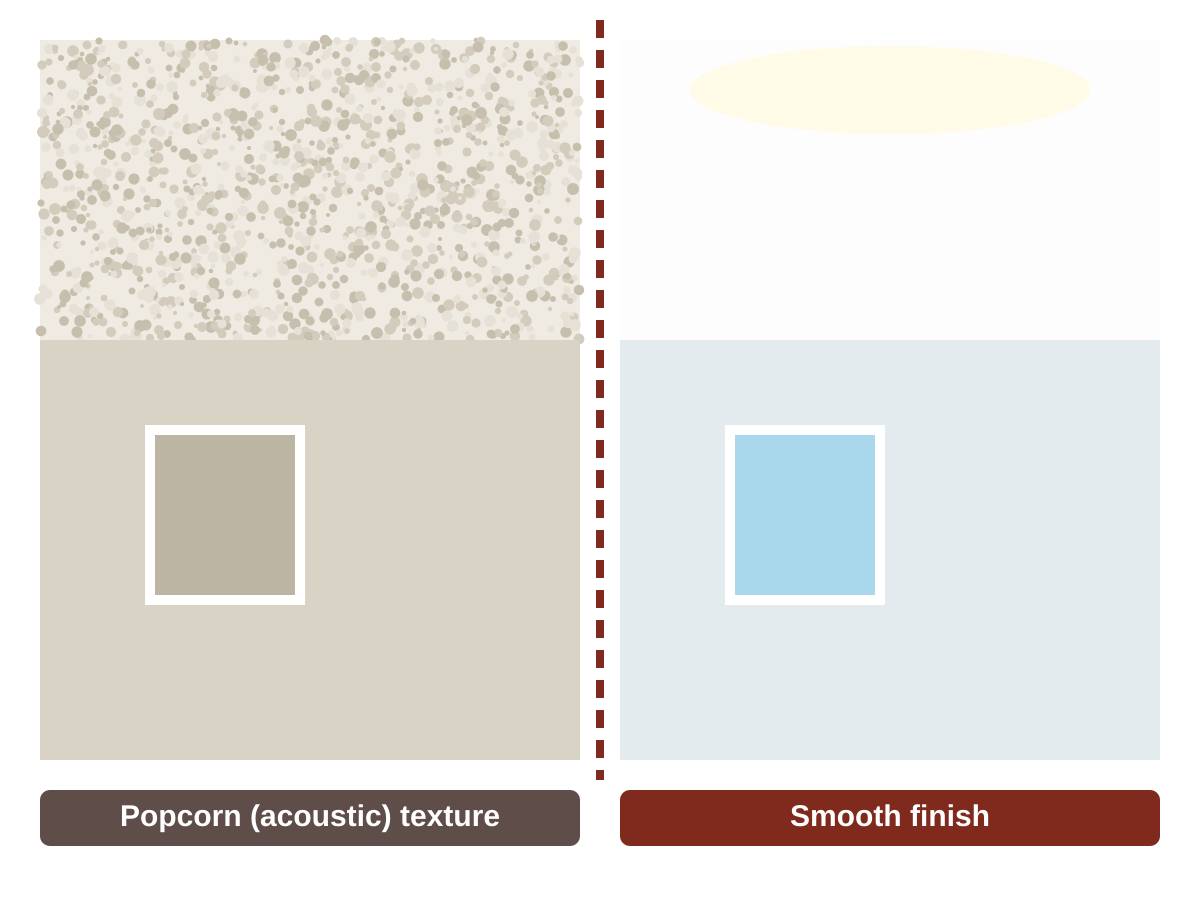
What skim coating is
A finisher spreads a thin layer of joint compound over the whole ceiling with a wide knife or roller-and-blade, lets it dry, sands it, and repeats. Each coat fills the low spots left by the one before. When light skims across it without catching a ridge, it's ready for primer. In trade terms this is a Level 5 finish, the highest level on the drywall industry's scale.
What the ceiling looks like before the first coat
- Tape joints that were only given a rough coat, since the builder expected texture to hide them
- Gouges where the scraper dug in, and torn paper if the texture was painted
- Old stains that need a sealing primer first
- Plaster cracks in older houses, which need to be secured before skimming or they'll come back
Those get fixed first. See ceiling repair.
Humidity and scheduling
Joint compound dries by evaporation, and a muggy Alabama summer slows it down. A coat that dries overnight in October can take much longer in July, especially in a closed-up room. Pros often run the air conditioning or a dehumidifier to keep things moving. Ask for a schedule that allows for drying time; a finisher who rushes the coats is the most common cause of hairline cracks and visible seams later.
Dust
Sanding compound makes fine dust. Good finishers seal the room, close off the HVAC returns, and use sanders connected to a vacuum. If you're living in the house during the work, ask exactly how they'll keep dust out of the rest of it.
When smooth is worth it, and when it isn't
- Worth it: living rooms and kitchens with big windows, open plans where one ceiling runs through several rooms, houses you plan to sell, and older homes where the ceilings were smooth plaster originally.
- Maybe not: basement dens, garages, closets, and rooms where a light texture would look just as good for less. See ceiling retexturing.
Questions to ask a finisher
- How many coats do you plan, and is the whole surface skimmed or just the joints?
- How will you control sanding dust?
- What primer goes on before paint? (See ceiling painting.)
- How do you handle plaster, or areas where the paper tore?
Want a price? Call (205) 528‑6076 and we'll connect you with a local professional for a free estimate, or read the Homewood cost guide first.